Planning a garden renovation, building extension or commercial groundwork project? One important decision is how you’ll remove the waste. When comparing grab hire vs skip hire, the right choice can affect your costs, workload and how smoothly the project runs.
For larger projects involving substantial amounts of soil, rubble or hardcore, grab hire is often the more practical option. However, skips still have advantages, particularly for smaller jobs or projects where waste builds up over several days.
Understanding the differences will help you choose the most suitable waste removal method without paying for unnecessary collections or creating extra work.
Grab Hire or Skip Hire: Which Is Better for Large Amounts of Waste?
Grab hire is often better for removing large quantities of heavy waste in one collection, especially when materials are already piled up and accessible to a grab lorry.
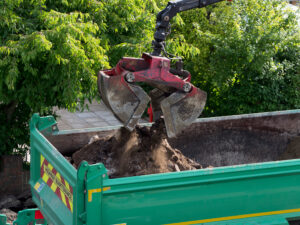
A hydraulic grab arm lifts suitable waste directly into the vehicle, reducing manual loading and the need to keep a container on-site.
Skip hire is generally more suitable when waste needs to be collected gradually, such as during a home renovation where different materials are removed over several days.
The best option depends on four factors: waste volume, material type, site access and how quickly you need everything cleared.
What's the Difference Between Grab Hire and Skip Hire?
Both services remove unwanted materials, but they operate differently.
Grab hire involves a specialist lorry fitted with a hydraulic arm. The operator collects suitable waste from an accessible pile and loads it directly onto the vehicle.
Skip hire involves delivering a container to your property or site. You fill it yourself, and the provider collects it when you’re finished.
Here’s how they compare:
| Factor | Grab Hire | Skip Hire |
|---|---|---|
| Waste volume | Often suited to larger quantities | Various skip sizes available |
| Loading | Hydraulic grab arm | Usually manual loading |
| Collection | Waste can be removed in one visit | Skip remains until collection |
| Site space | Requires suitable lorry access | Requires space for a container |
| Permits | Depends on vehicle positioning and local rules | Usually required if placed on a public road |
| Best suited to | Bulk soil, rubble and hardcore | Smaller or ongoing clearances |
Neither option is automatically better. The important question is how the waste is produced, stored and removed.

When Is Grab Hire the Better Option?
Large Quantities of Soil, Rubble and Hardcore
Heavy materials can fill skips quickly and may reach their weight limits before the container is full.
Grab lorries are designed to transport bulk materials, making them particularly useful for foundation excavations, driveway replacements and substantial landscaping work.
For example, excavating a large garden can produce several piles of soil. Rather than arranging multiple skips, a suitable grab lorry may remove the material in fewer collections.
Projects Where Time Matters
On busy construction sites, waste piles can restrict access and interrupt other work.
Grab hire allows suitable materials to be collected without leaving a skip on-site for an extended period.
This can be particularly helpful for builders and groundworkers who need to clear excavated material before the next stage of construction.
Reducing Manual Labour
Filling a skip with soil or rubble often involves repeated wheelbarrow journeys and considerable physical effort.
With grab hire, the hydraulic arm handles the loading, provided the waste is positioned within safe reach.
This reduces manual handling and allows workers to concentrate on other tasks.
When Might Skip Hire Be More Suitable?
Despite the advantages of grab lorries, skips remain useful for many projects.
A skip may be preferable when:
- Waste accumulates gradually throughout a renovation.
- You have a relatively small quantity of material.
- You need a designated container to keep the working area organised.
- A grab lorry cannot safely access or reach the waste.
- The waste consists of mixed materials unsuitable for the intended grab collection.
For example, someone renovating a kitchen over several weekends may benefit from keeping a skip available rather than arranging repeated collections.

Is Grab Hire Cheaper Than Skip Hire?
Grab hire can be more cost-effective for larger projects, but the cheapest option depends on the job.
When comparing prices, consider the total cost of removing all your waste, rather than the price of one collection.
Important factors include:
- Waste quantity: Multiple skips may cost more than a suitable grab collection.
- Labour: Manually loading heavy materials takes time and effort.
- Hire duration: Extended skip hire may involve additional charges.
- Permits: Roadside skip placement can require a council permit.
- Access: Difficult collection conditions can affect either service.
For smaller amounts of waste, a single skip may be the more economical choice.
Before booking, obtain quotations based on your estimated waste quantity, material type and site conditions.
What Should You Check Before Booking a Grab Lorry?
A little preparation can prevent collection delays.
First, check whether the lorry can safely reach your waste. Consider road width, parked vehicles, overhead cables, trees and the distance between the vehicle and material pile.
Keep waste types separate where possible. Soil, rubble and hardcore may have different collection requirements, while hazardous or contaminated materials need specialist assessment.
You should also consider where the vehicle will stop. Grab hire does not automatically eliminate permit or highway restrictions.
Frequently Asked Questions About Grab Hire vs Skip Hire
Can a Grab Lorry Remove More Waste Than a Skip?
Often, yes. Larger grab lorries can carry substantial quantities of heavy material, although capacity depends on vehicle size, material weight and legal load limits. Compare actual capacities rather than assuming every grab lorry holds more than every skip.
Do I Need a Permit for Grab Hire?
Not necessarily. Requirements depend on where the vehicle operates and whether it obstructs or occupies the public highway. Skips placed on public roads generally require permission from the relevant council.
Can Grab Hire Remove Mixed Building Waste?
Some mixed waste may be accepted, but this depends on the materials and collection arrangements. Always confirm what’s included before booking.
Is Grab Hire Suitable for Domestic Projects?
Yes. Grab hire can be useful for garden renovations, driveway excavations, extensions and other home improvement projects producing substantial quantities of suitable waste.
Making the Right Choice for Your Project
If you’re removing a large quantity of soil, rubble or hardcore, grab hire is often worth considering first. It can reduce manual loading, simplify bulk waste removal and help keep work moving.
For smaller jobs or waste produced gradually, a skip may be more convenient.
At Stourbridge Grab Hire, we support domestic and commercial projects across Stourbridge and surrounding parts of the West Midlands.
If you’re unsure which option suits your project, explore our grab hire services or get in touch to discuss your waste removal requirements.